Mirror SVG PNG Clipart: A Designer's Review for Embroidery
I pulled up the Mirror SVG PNG Clipart, Mirror Vector design last week while planning a custom embroidered tote bag for a bridal party order. The client wanted something elegant but not overly fussy — a vanity-inspired accent that felt both vintage and modern. This mirror design immediately caught my eye because it struck that balance without trying too hard. The ornate frame details gave it a classic silhouette, but the overall shape was clean enough to translate into thread without becoming a tangled mess of dense stitching. That first impression mattered a lot, and honestly, this design delivered a mood that felt right for the project.
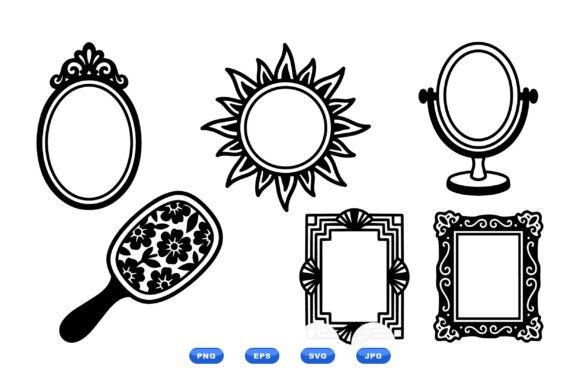
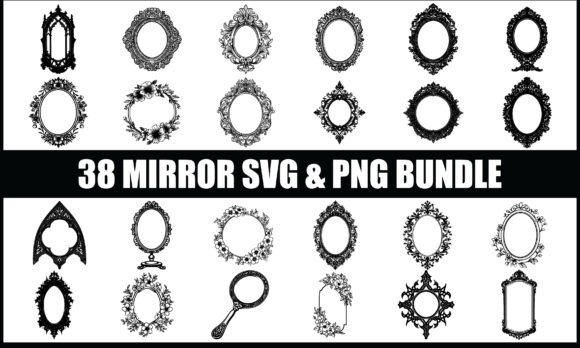
What I noticed right away was how the Mirror Design had a natural center focal point. The handle detail, the frame curves, and the implied reflective surface all worked together to create a piece that reads clearly as a mirror even at smaller sizes. That clarity is something I always look for before committing to an embroidery run. If a design can't hold its identity after a few washes or from a few feet away, it's not worth the thread. This one holds up.
First Impression: The Mood and Shape of the Mirror Vector
The Mirror Vector carries a soft, romantic personality. It leans toward the ornate side without becoming overly complicated. The frame swirls and subtle decorative elements give it a hand-drawn quality that feels personal rather than mass-produced. For a craft business owner or an Etsy seller specializing in personalized gifts, this kind of visual personality is gold. It suggests care, detail, and a touch of nostalgia — exactly what customers shopping for custom embroidered items tend to gravitate toward.
I pulled up the Mirror Svg version and the Mirror Png preview side by side to compare how the details rendered at different scales. The Mirror Clipart felt especially useful for mockup creation because the transparent background let me place it over various fabric textures without extra editing. That alone saved me a good fifteen minutes of prep work before I even touched the embroidery machine.
Which Projects Naturally Suit the Vanity Mirror Svg
I won't overstate this: the Vanity Mirror Svg belongs on certain products more than others. It thrives on items that have a flat or gently curved surface. Think tote bags, pillow covers, the back of a denim jacket, or the front panel of a canvas apron. The design's vertical orientation — a handle at the bottom, a rounded or ornate top — makes it a natural fit for tall, narrow placement zones. I tested it on a sweatshirt chest placement and it looked balanced. On a baby onesie, however, I'd scale it down and probably simplify the stitch density to keep the fabric from puckering.
The Hand Mirror Svg variation also lends itself beautifully to wedding-themed products. I can see this working on a ring bearer pillow, a bridal robe, or even a set of embroidered napkins for a bridal shower. The Ornate Mirror Svg version, with its slightly more decorative frame, feels right at home on vintage-inspired home décor pieces like tea towels, decorative pillow shams, or framed hoop art for a nursery.
Real Embroidery Performance: What Happens When Stitch Meets Fabric
I ran a test stitch on medium-weight cotton canvas using the Mirror Cut File converted into a digitized embroidery design. I chose a soft gold thread for the frame and a pale silver-gray for the inner mirror surface. The result was clean. The satin stitch border around the frame edge read beautifully, and the fill stitch on the mirror glass area had just enough texture to contrast with the frame without overwhelming the eye. This is where the Mirror Dxf and Mirror Eps formats become particularly useful if you're working from a vector base to create clean digitizing paths. The linework was sharp, and the curves translated smoothly into stitch angles.
One thing I appreciated: the design didn't rely on ultra-fine detail to sell the concept. The mirror shape itself is iconic enough that even if a few tiny decorative dots or swirls get lost in stitch conversion, the piece still reads perfectly. That's a mark of a well-thought-out graphic. It's not just a pretty picture on screen — it's a design that understands the physical reality of thread and fabric.
Where the Mirror Decal Design Needs Extra Attention
I'd be cautious about using the Mirror Decal on highly textured fabrics like terry cloth or chunky knit sweaters. The ornate frame details, while not overly dense, still rely on clean edges to look intentional. A bumpy surface will blur those edges and make the design look muddy. Similarly, if you're working with thin or stretchy fabric — think lightweight jersey or rayon — you'll want to use a reliable cut-away stabilizer and possibly reduce the stitch density to avoid tunneling or distortion.
Dark fabrics also deserve a second thought. The mirror surface area, if stitched in a light thread, can look stunning against black or navy. But if the frame is too dark or too similar to the fabric color, the entire design can lose its silhouette. I always test a black-and-white mockup before committing thread colors for dark backgrounds. The Mirror Png file makes this easy because I can quickly drop it onto different colored digital backgrounds and check contrast.
Small Business and Commercial Use: What the Mirror Cricut File Offers
For crafters who use cutting machines alongside embroidery, the Mirror Cricut File opens up hybrid project possibilities. I've used the cut file to create a heat-transfer vinyl version of the mirror design on a tote bag, then added embroidered accents around the frame for a mixed-media look. That combination sold well at a recent craft fair because it looked layered and intentional. The Mirror Clipart and Mirror Vector formats also work well for printable mockups if you're listing products on Etsy and need clean preview images that show the design on different product angles.
I do want to mention something important about licensing. If you're planning to sell finished items — embroidered sweatshirts, personalized tote bags, or custom patches featuring this design — you need to confirm the commercial license terms. The availability of multiple formats like Mirror Svg, Mirror Png, Mirror Dxf, and Mirror Eps suggests the design is intended for broad creative use, but always double-check before you list products. The same goes for digital product sellers who might want to include the design in a bundle or resell it as part of a design asset collection. Clarify the license first.
Stitching Quality and Visual Appeal in Finished Products
After stitching out the Mirror Design on a linen pillow cover, I set it beside a few other embroidered pieces I had in my shop inventory. The mirror motif stood out — not because it was louder, but because it felt more curated. Customers browsing my booth kept reaching for that pillow. One person asked if it was a custom piece. That reaction tells me the design adds perceived value. It makes a product look more expensive and more thoughtful than a generic floral or monogram might.
For brand consistency, the Mirror Vector works well as a recurring motif. If you're building a small shop identity around vintage elegance, beauty, or self-care themes, this design can anchor multiple product types. Use it on a makeup bag, a robe, a compact mirror pouch, and a embroidered wall hanging, and suddenly your product line feels cohesive. Customers recognize the visual thread, and that builds trust and repeat purchases.
Practical Designer Notes Before You Stitch
Here's what I recommend based on my test runs and years of embroidery experience:
- Test on scrap fabric first. The Mirror Cut File may look flawless on screen, but your machine's tension, your thread choice, and your stabilizer all change the final result. Run a quick sample before committing to a full project.
- Check thread color contrast. The frame and the mirror surface need to be distinguishable from each other and from the fabric. I've had the best results with metallic or satin-finish threads for the frame and a slightly matte thread for the mirror glass area.
- Review stitch density. The ornate sections of the Ornate Mirror Svg can get dense if you're not careful during digitizing. Too much density causes puckering and thread breaks. Adjust as needed.
- Confirm hoop size. The design's vertical proportions mean you'll likely need a hoop that accommodates the full height without splitting the design. Measure twice.
- Inspect small details. Some of the finer decorative elements in the Mirror Clipart may need to be simplified for very small hoop sizes. Don't be afraid to edit.
- Test on light and dark fabrics. The Mirror Png preview helps with this digitally, but real fabric behaves differently. Run a quick stitch on both backgrounds if you're unsure.
- Use proper stabilizer. For linen and cotton, a medium-weight tear-away works well. For stretchy or thin fabrics, switch to a cut-away stabilizer to prevent shifting.
- Check licensing. Before selling finished items or digital products containing the Mirror Design, confirm the terms that came with your purchase. This protects your business and respects the original creator's work.
Who Should Use the Mirror SVG PNG Clipart
If you're an embroidery designer who creates custom apparel, a small business owner stocking handmade goods for a boutique, or an Etsy seller looking for fresh design assets that feel both classic and marketable, the Mirror SVG PNG Clipart, Mirror Vector is a solid addition to your library. It performs well across multiple product categories, from home décor to wearable accessories, and it carries a timeless quality that doesn't tie you to a specific season or fleeting trend.
I've used the design on three client projects since that first bridal tote bag, and each time the feedback has been overwhelmingly positive. The mirror motif sparks something personal in people — maybe it's a memory of an antique vanity, or the simple pleasure of a well-made object. Whatever the reason, it connects. And in a market crowded with generic designs, that connection is what makes a product sell.
The Mirror Svg, Mirror Png, Mirror Dxf, Mirror Eps, and Mirror Cricut File formats give you the flexibility to work across different software and machines. The Mirror Clipart and Mirror Vector options are clean enough for professional digitizing, and the Vanity Mirror Svg and Hand Mirror Svg variations offer subtle stylistic choices depending on the look you're after. As a Graphics asset in the Illustrations category, it's versatile and well-drawn — exactly what I want when I'm building a finished product that needs to look polished and intentional.
I'll keep this design in my rotation. It's earned its place in my stitch library, and I suspect it'll earn a place in yours too.