Vintage Baby Clipart Collection
First Impressions: Delicate, Timeless, and Quietly Confident
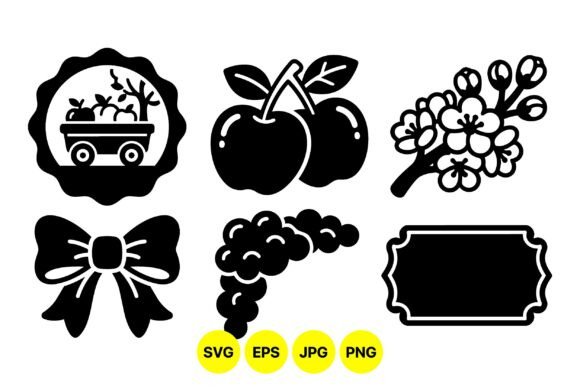
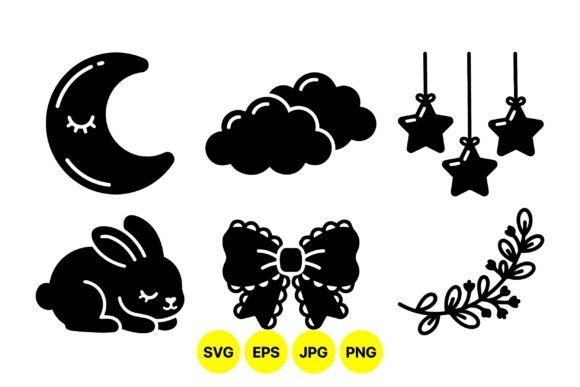
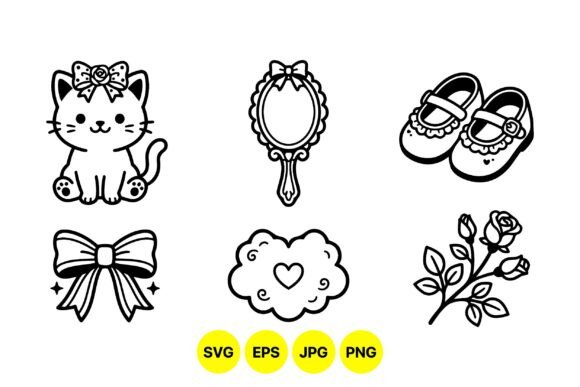
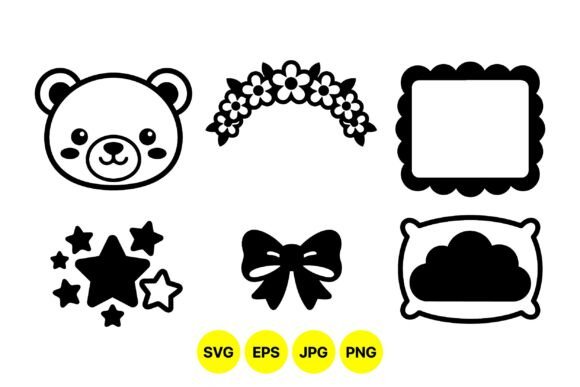
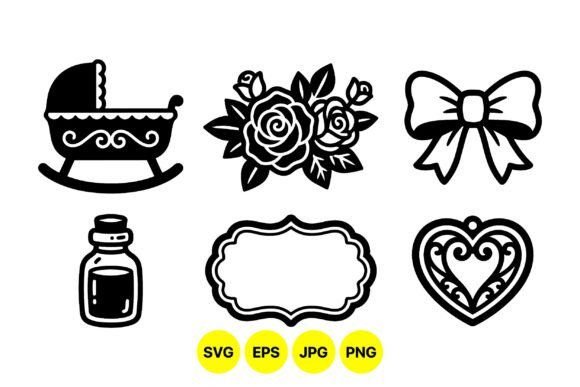
Opening the Vintage Baby Clipart Collection, I felt that familiar little spark — not excitement over flash or novelty, but recognition. These six black silhouette vector icons — cradle, rose bouquet, decorative bow, small bottle, ornate label, and heart-shaped ornamental frame — don’t shout. They lean in. The flat, clean style feels intentional, not minimal by accident. There’s weight in the curves of the cradle, soft rhythm in the rose petals, and just enough detail in the bow’s loops to read clearly at 2–3 inches tall. This isn’t nursery kitsch; it’s heirloom-adjacent. I immediately pictured stitching one onto a linen tea towel for a baby shower gift — not as a loud statement, but as a quiet, thoughtful signature.
Real Project Test: A Custom Embroidered Cotton Tote for a Local Boutique
Last week, I used the ornate label icon from the Vintage Baby Clipart Collection on a medium-weight natural cotton tote bag — part of a small batch for a local boutique specializing in handmade baby goods. I digitized it myself (as a machine embroidery design), keeping stitch density moderate to preserve crisp edges without overloading the fabric. On the finished tote, the label sat centered above the pocket, stitched in cream thread on oat-colored linen-cotton blend. Customers paused. Not because it was flashy, but because it *felt* considered — like the kind of detail you’d find stamped on vintage stationery or pressed into wax seal. That subtle authority matters when selling handmade product. It tells buyers: this wasn’t slapped on. It was chosen with care.
Where It Shines — And Where It Asks for Thought
The Vintage Baby Clipart Collection excels in projects where elegance meets function: embroidered baby onesies (cradle or heart frame), satin-stitched patches for denim jackets, delicate applique designs on muslin burp cloths, or even as standalone motifs on kitchen towels and pillow covers. Its simplicity makes it unusually versatile across embroidery file types — whether used as a fill-stitch centerpiece or scaled down for a running-stitch border on a custom sweatshirt cuff.
But here’s what I watched closely: on stretchy knit fabric (like a baby bodysuit), the cradle’s fine legs needed extra stabilizer support — not because the shape failed, but because the clean lines demand precision. On dark fabric, I tested both white and ecru thread; ecru won. It preserved the vintage mood better than stark contrast. And on curved surfaces — say, a structured cap front — I avoided the rose bouquet at full size; its layered petals risked distortion unless digitized with careful underlay and reduced density. The bow and heart frame? Perfect. Clean curves hold up beautifully.
What It Adds to Your Finished Product
- Visual appeal: Instantly elevates tone — think “curated boutique” over “craft fair table.”
- Stitching clarity: Bold silhouettes translate cleanly even at 1.5–2 inches wide, with no fussy interior details to misfire.
- Product value: Buyers associate this style with intentionality — they’ll pay more for a personalized gift stitched with these motifs.
- Brand consistency: If your craft business leans into timeless, gentle aesthetics (not cartoonish or ultra-modern), this collection reinforces that voice across apparel, patches, and digital embroidery file previews.
- Giftability: Feels special without being cloying — ideal for baby showers, wedding favors, or holiday embroidery for new parents.
Practical Notes Every Embroidery Designer Should Keep Handy
Before cutting thread or loading a hoop, here’s what I do — and recommend you do — with the Vintage Baby Clipart Collection:
- Test on scrap fabric *first*, especially if using textured weaves (like burlap-style tea towels) or thin cottons — silhouette edges can soften if stabilizer isn’t matched precisely.
- Check thread color contrast against your base fabric in natural light — black-on-charcoal can disappear; cream-on-ivory needs careful saturation control.
- Review stitch density in your digitizing software — avoid dense fill stitches in tight corners (like the bow’s knot); opt for lighter fill or satin stitch instead.
- Confirm hoop size compatibility — all six icons scale well, but the rose bouquet and cradle benefit from at least a 4" x 4" hoop for optimal clarity.
- Inspect small details at 200% zoom: the cradle’s slats, the bottle’s neck curve, the heart’s inner contour — these define the collection’s charm and must survive stitching.
- Test in black-and-white mockups — this collection relies on shape and rhythm, not color, so grayscale previews reveal how well it’ll read on varied backgrounds.
- Use cutaway stabilizer for knits, tear-away for stable wovens, and lightweight fusible for delicate linens — the flat style shows every puckering flaw.
- Verify licensing terms before selling finished items or bundling as part of a digital embroidery file pack — while the collection falls under Illustrations/Graphics, commercial use rights aren’t implied by format alone.
Who This Collection Is Really For
If you’re an Etsy seller building a cohesive line of baby embroidery kits, a small shop owner curating nursery decor, or a craft business owner designing custom sweatshirt embroidery for expecting parents — this is your quiet secret weapon. It’s not for high-contrast streetwear or bold kids’ apparel. It’s for the maker who values restraint, the designer who knows less thread often reads as more care, and the entrepreneur who understands that customers don’t just buy a tote bag — they buy the feeling of something made with attention.
The Vintage Baby Clipart Collection doesn’t solve every embroidery project. But for the right ones — the personalized gift, the boutique-branded patch, the holiday embroidery with soul — it adds exactly the kind of quiet confidence that makes handmade product feel truly finished.