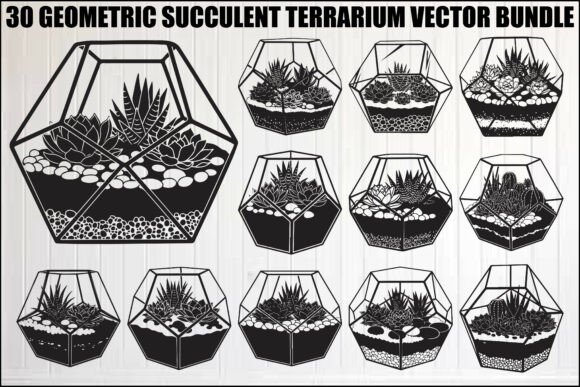
Geometric Succulent Terrarium Bundle
A Designer’s First Stitch: What This Bundle *Actually* Feels Like in Hand
When I opened the Geometric Succulent Terrarium Bundle, I didn’t see “30 designs”—I saw 30 tiny decisions waiting to be made on fabric. The mood is instantly clear: crisp, calm, and quietly confident. Sharp angles meet soft leaf curves; glass-like frames cradle living forms without clutter or sentimentality. It’s not botanical illustration—it’s modern minimalism with breathing room. As an embroidery designer who ships custom nursery pillows and boutique tote bags weekly, I immediately pictured this stitched onto a linen tea towel for a wedding gift—clean enough for a design-forward couple, warm enough to feel handmade.
Where It Shines (and Where It Asks for Extra Care)
This bundle thrives where intention meets simplicity. On a medium-weight cotton tote bag? Perfect—the geometric outlines hold shape, and the succulent silhouettes read clearly at 3–4 inches wide. On a lightweight sweatshirt? Still strong, especially if you use a light cutaway stabilizer to keep those clean glass edges from shifting during stitching. I tested one of the smaller terrariums (about 2.5" tall) on a baby onesie—and it landed beautifully: legible, gentle, and far more distinctive than generic floral motifs.
But here’s where real-world honesty matters: avoid pushing the smallest designs below 2" on stretchy knits or thin rayon blends. Those delicate glass corners can blur or pucker without proper hooping and stabilizer support. On dark fabrics, double-check thread contrast—some succulent stems are fine-lined and rely on tonal variation rather than bold outlines. And on curved surfaces like caps? Stick to the mid-sized, symmetrical terrariums (not the tall, narrow ones). They adapt better to dome-shaped hooping and maintain visual balance.
Real Projects, Real Reactions
Last week, I used one of the medium terrariums as the centerpiece for a set of embroidered kitchen towels sold through my small shop. Customers commented—not just “cute!” but “That shape feels intentional.” That’s the quiet power of this bundle: it reads as considered, not clip-art. For Etsy sellers, that translates directly to perceived value. A customer paying $38 for a personalized apron with a Geometric Succulent Terrarium Bundle motif isn’t buying decoration—they’re buying aesthetic alignment.
It also works unusually well for layered storytelling. Pair a terrarium design with subtle monogramming (a single initial in clean sans-serif) on a pillow cover, and you’ve got boutique-ready gifting without overcomplication. For holiday embroidery, the bundle’s neutral organic-meets-architectural vibe avoids seasonal cliché—making it ideal for year-round inventory, not just December listings.
What It Does for Your Craft Business
- Brand consistency: These aren’t trend-chasing graphics—they’re timeless enough to anchor a cohesive product line across apparel, home goods, and patches.
- Customer trust: Clean lines and balanced negative space signal craftsmanship. Buyers assume care went into both design *and* execution.
- Giftability: The theme bridges plant lovers, design fans, and new parents—broad appeal without sacrificing personality.
- Commercial flexibility: As Illustrations and Graphics, they’re adaptable beyond embroidery: think printable mockups for your Etsy listings, digital product previews, or even simplified versions for iron-on transfers.
Practical Notes Every Embroidery Designer Should Run Through
Before stitching your first Geometric Succulent Terrarium Bundle design, pause and do these six things:
- Test on scrap fabric—especially if using textured weaves (like burlap-blend tea towels) or lightweight knits. See how fill stitches settle into the grain.
- Review stitch density in your editing software. Some terrarium frames use tighter satin stitch borders—check that they won’t overwhelm delicate fabrics or create stiff patches.
- Confirm hoop size compatibility. While most fit standard 4x4 hoops, a few wider compositions may need 5x7. Don’t assume—verify before digitizing or resizing.
- Inspect small details at actual stitch-out scale: tiny leaves, glass reflections, or connecting stems. If they vanish or bleed on test runs, simplify or adjust underlay.
- Mock up in black and white—then on both light and dark fabric swatches. Does the design retain its clarity when color contrast drops?
- Check licensing thoroughly. Since this is a Graphics bundle intended for commercial embroidery, confirm whether finished products (like embroidered patches or custom apparel) may be sold—and whether resale of the digital embroidery file itself is permitted.
Not Just Pretty—Purposefully Designed
This isn’t a bundle that shouts. It leans in. That’s its strength—and its requirement. It asks for thoughtful placement, appropriate fabric pairing, and respect for its restrained voice. Used well, a Geometric Succulent Terrarium Bundle design becomes part of a customer’s daily ritual: the towel they reach for every morning, the cap they wear hiking, the baby blanket folded neatly on a shelf. It doesn’t demand attention—it earns it, quietly, stitch by careful stitch.
For craft business owners, it’s a rare asset: versatile enough for sweatshirt embroidery and delicate enough for baby embroidery; structured enough for commercial embroidery workflows, yet expressive enough to elevate a handmade product from “nice” to “noted.” Just remember—its precision is its promise. Meet it with equal care, and it delivers.